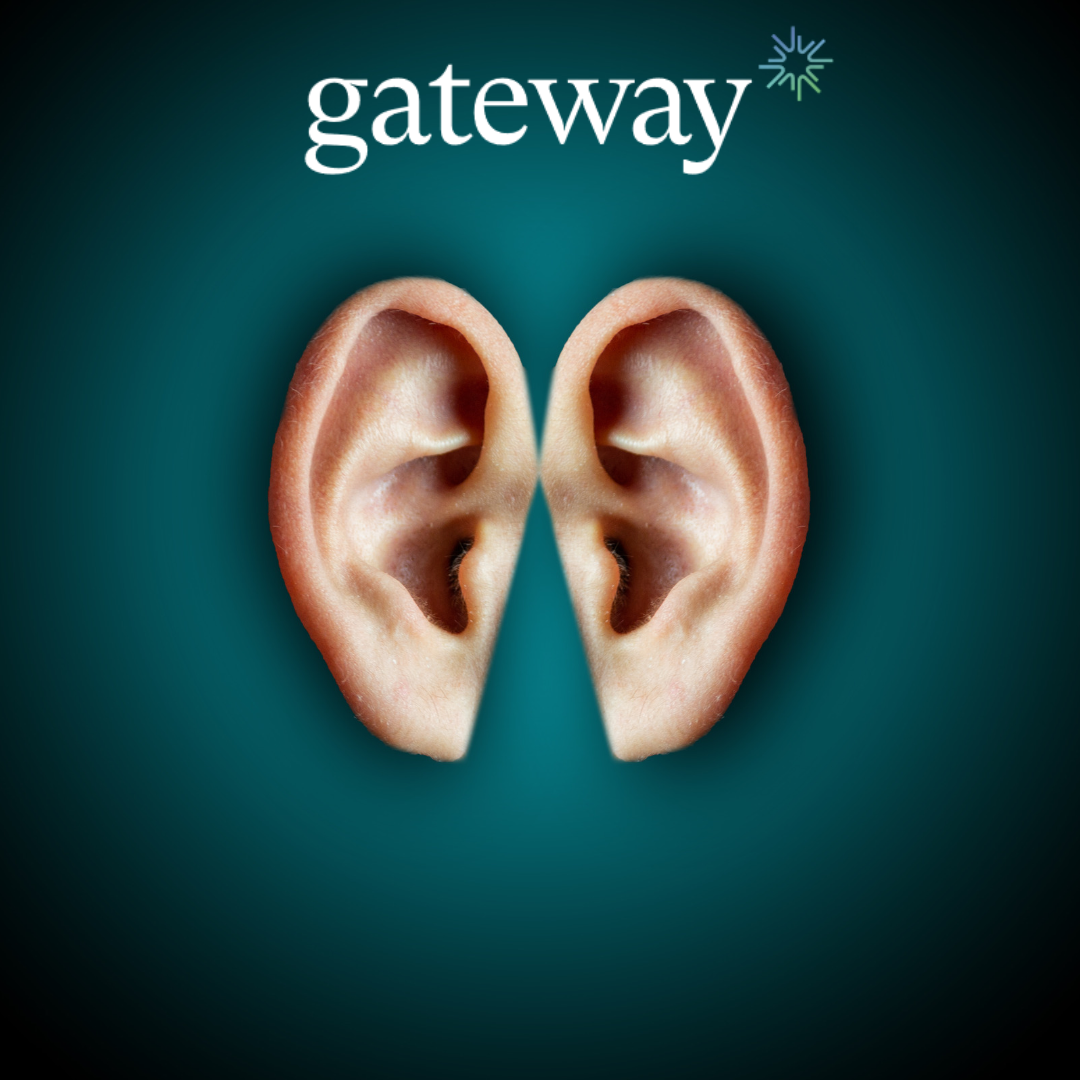



In a world full of noise, active listening has become a radical act. We hear things all day long—phones buzz, news streams, meetings stack up—but truly listening? That takes effort. That takes presence. That takes intention.
At Gateway, we believe listening is more than just polite behavior or a workplace “soft skill.” It is the foundation of every meaningful connection and the core of our mission: a world where everyone can understand and be understood.
Why Active Listening is Where Communication Begins
Communication isn’t just about talking—it’s about being understood. And understanding starts with listening.
Whether it is a child learning to speak their first word with the help of a speech therapist, or a Deaf adult navigating healthcare with an ASL interpreter by their side, every breakthrough we witness begins with someone being deeply, attentively heard.
Listening is not passive. It is a practice of honoring another person’s experience. It allows us to recognize that communication challenges don’t look the same for everyone—whether it’s trouble following directions, memory struggles, or simply finding the words to get needs met.
Listening in the Workplace: A Competitive Advantage
In the professional world, listening can be transformative. Leaders who listen first make better decisions, and teams that listen to each other innovate faster.
At Gateway, we serve over 8,000 Marylanders every year, training our interpreters, therapists, educators, and staff not just to deliver services, but to tune in. Because when we truly listen—to tone, to body language, to silence—we uncover what’s not being said. We pick up nuance. We build respect.
Overcoming Distraction to Find Connection
Let’s be real: we live in a distracted world. We scroll while talking. We multitask through meetings. We half-hear. But when we don’t listen, we miss more than information—we miss connection.
For the students in our classrooms, the clients in our therapy sessions, and the Deaf and Hard of Hearing community we serve—being listened to is not a luxury, it’s a right.
This is especially vital regarding hearing health. Research shows that untreated hearing loss is linked to increased risks of cognitive decline and depression. Listening to your own body and prioritizing a hearing screening is an act of self-care.
Reclaiming the Skill of Listening in 2026
What if we entered this year with a new resolution—not to talk more, but to listen better? Here is how you can practice impactful communication this year:
- Listen to children: Give them space as they find their words and navigate social skills.
- Listen to the Deaf Community: Recognize the barriers in systems not built for them.
- Listen to coworkers: Pay attention to those who feel unseen or unheard.
- Listen to yourself: Respect your body, your hearing health, and your boundaries.
Gateway’s Commitment to Listening
At Gateway, listening is not just something we do—it’s who we are.
- In Interpreting: Skilled professionals listen deeply to relay meaning with accuracy and cultural context.
- In Therapy Rooms: We listen to what a child says—and doesn’t say—to guide their growth in articulation and language.
- In Our School: We listen to our neurodivergent students with empathy, not assumptions, creating an environment where they can shine.
- In Leadership: Decisions are informed by community voice, not top-down strategy.
Ready to Practice the Power of Listening?
Connection changes lives. Here are three ways you can build a 2026 rooted in presence, empathy, and connection with Gateway:
Learn a New Language: Take an ASL class and learn to listen with your eyes. Classes start January 13th!.
Check Your Health: Book a hearing evaluation at our clinic and reconnect with your ability to listen.
Support the Mission: Support Gateway’s work in creating a world where every voice is heard.
Learn More About Gateway Maryland
Gateway Maryland connects people to their worlds and aids individuals in their ability to understand and to be understood. Gateway Maryland has grown into an organization that serves more than 8,000 children and adults every year, helping them communicate more effectively. With programming both on our Baltimore campus and through community-based programming, we provide education, access, and medical support to anyone who needs it.
We envision a society where everyone can understand and be understood and where everyone is treated with integrity, compassion, and equity.