

When every second counts, communication shouldn’t be an afterthought.
Every day, our American Sign Language (ASL) interpreters step into urgent, high-stakes situations where communication is not just important—it’s life-saving. We’re not talking about scheduled appointments or predictable settings. We’re talking about the chaos of ERs, the confusion of courtroom emergencies, and the intensity of mental health crises. These are moments where someone’s ability to be understood could quite literally shape their outcome.
In these scenarios, Gateway interpreters do more than interpret—they become lifelines.
The Reality of Crisis Work
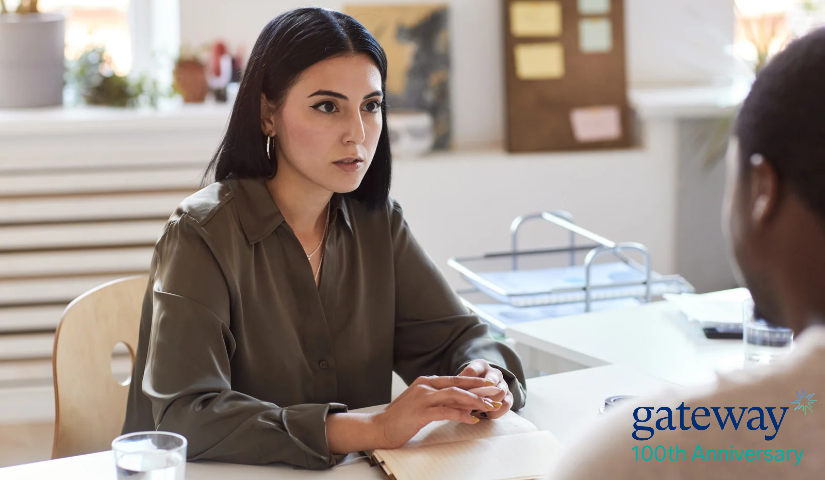
Let’s paint a picture: A Deaf mother arrives at the emergency room after a car accident. She’s disoriented, bleeding, and terrified. Her young child is crying beside her. The nurses are asking rapid-fire questions. Everyone’s moving quickly. In that swirl of panic, a Gateway interpreter arrives—calm, composed, and fluent in both ASL and urgency.
Or consider this: A Deaf individual is picked up in a mental health crisis. Police aren’t sure how to de-escalate the situation. Emotions are high. Without clear communication, the risk of harm rises. A Gateway interpreter gets the call. They show up not just as a translator, but as a bridge—bringing clarity, diffusing tension, and helping everyone understand what’s really going on.
This is what emergency interpreting looks like. And this is what Gateway does—24/7/365.
The Skill Behind the Calm
There’s a unique skill set required to interpret during a crisis—and it’s not just about knowing ASL. Emergency interpreting calls for:
- Emotional intelligence. Our interpreters must read a room quickly, pick up on nonverbal cues, and adjust their tone and style accordingly.
- Situational awareness. Whether it’s a trauma bay, a psych intake, or a courtroom, interpreters have to move with the flow, never becoming a distraction while remaining fully present.
- Split-second judgment. What’s the best way to render this information clearly and accurately—right now, in this moment, with this audience?
And perhaps most importantly: our interpreters must be culturally aware. Deaf individuals aren’t just navigating a crisis—they’re navigating it in a world not built for them. Gateway interpreters understand the lived experiences of the Deaf community and bring that knowledge with them into every room, every conversation.
The Human Cost of Getting It Wrong
Imagine being in the middle of a medical emergency and not being able to tell the doctor what hurts. Imagine trying to defend yourself in court when you can’t follow what’s being said. Or picture being in the throes of a panic attack and not having the words—or the hands—to explain what you need.
That’s the cost of not having an interpreter in place. Confusion. Delays. Misdiagnoses. Misunderstandings. Trauma.
And unfortunately, too many systems are still underprepared.
Crisis Interpreting Is Community Care
Emergency interpreting is a public service. A form of justice. An act of compassion.
When a Gateway interpreter shows up in a crisis, they’re not just facilitating language—they’re protecting autonomy. Preserving dignity. Ensuring that everyone has the right to be heard, especially when it matters most.
That’s why Gateway Interpreting Services exists.
To turn chaos into clarity. Fear into understanding. Crisis into confidence.
Whether you’re a healthcare provider, first responder, or community partner—we’re ready when you are.
Learn more about Gateway Interpreting Services and how we support Maryland around the clock: https://gatewaymaryland.org/services/interpreting/
We have interpreters on-call 24/7. We provide both in-person and virtual interpreting solutions. And we coordinate with medical professionals, legal systems, and mental health providers to make sure the moment a Deaf or hard-of-hearing individual walks through their doors, communication access isn’t just available—it’s seamless.
Because nobody should be left out of a conversation that could define their safety, their freedom, or their life.
By Dave Coyne
If you want to connect to discuss this topic further, please reach out to me at dcoyne@gatewaymaryland.org to schedule a time to meet.
Learn More About Gateway
Gateway connects people to their worlds and aids individuals in their ability to understand and to be understood. Gateway has grown into an organization that serves more than 8,000 children and adults every year, helping them communicate more effectively. With programming both on our Baltimore campus and through community-based programming, we provide education, access, and medical support to anyone who needs it.
We envision a society where everyone can understand and be understood and where everyone is treated with integrity, compassion, and equity.