


If you’ve ever said, “I can hear you… I just can’t understand you,” you’re not alone. One of the most common early signs of hearing loss isn’t total silence. It’s reduced clarity, especially in real-world situations like restaurants, meetings, classrooms, and family gatherings.
That’s because hearing isn’t just about volume. It’s about how your brain processes sound, separates voices from background noise, and fills in gaps when speech gets muddy. Many people don’t realize they’re working overtime just to keep up, until the fatigue becomes unavoidable.
Why background noise feels so exhausting
A major complaint among people with hearing loss is difficulty understanding speech in background noise. In fact, speech-in-noise performance can look very different from hearing tests done in quiet, which is why many audiology clinics include testing that reflects real life.
When clarity drops, your brain compensates. You may find yourself watching lips more closely, leaning in, guessing words from context, or smiling and nodding when you’re not fully sure what was said. That mental load adds up, and it often shows up as listening fatigue. You might leave a social event drained, avoid group conversations, or feel less confident speaking up at work, even though you “heard” plenty of sound.
“Sound isn’t clarity” often looks like this
If any of these feel familiar, it may be time to check your hearing:
You’re hearing people talk, but it feels like they’re mumbling.
You do fine one-on-one, but group settings are hard.
You ask people to repeat themselves, especially in noise.
You turn the TV up, then others say it’s too loud.
You feel tired or irritable after conversations.
These are common signs noted by hearing health organizations and are often the moments when people realize something has shifted.
Hearing health is also brain health
Hearing care isn’t only about comfort. It’s increasingly understood as part of long-term health. Research continues to explore the relationship between hearing loss and cognitive decline. Johns Hopkins researchers have highlighted evidence linking hearing loss with dementia risk and have called for public health action to improve hearing care access.
In addition, a large NIH-supported clinical trial found that in older adults at higher risk of dementia, hearing aids reduced the rate of cognitive decline by nearly half over a three-year period. That doesn’t mean hearing aids are a cure or a guarantee, but it does reinforce something we believe strongly: treating hearing loss matters, and early support can have wide-reaching benefits.
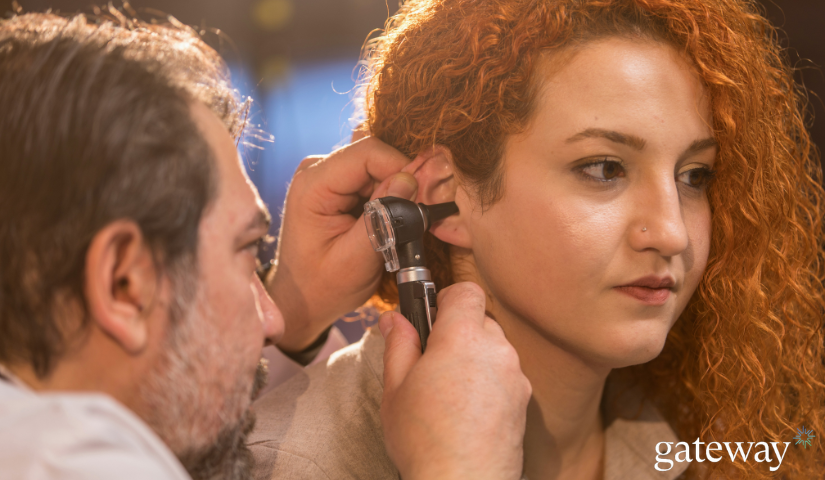
What a hearing evaluation actually gives you
A hearing test is not just a pass/fail moment. It’s information. It can help you understand:
- whether your challenge is volume, clarity, or both
- how you hear in noise compared to quiet
- what options could improve your day-to-day life
- what protective steps you can take moving forward
Sometimes the next step is hearing aids. Sometimes it’s hearing protection, a medical referral, a device adjustment, or simply monitoring over time. The goal is always the same: help you stay connected to your world.
How Gateway Audiology can help
At Gateway, our audiology team is here to support both children and adults with hearing healthcare that is practical, respectful, and rooted in real life. Gateway Audiology offers comprehensive hearing testing, hearing aid evaluation and customization, repairs and modifications, and hearing aid dispensing from major manufacturers. We also provide hearing aid accessories and batteries, plus custom hearing protection including musician’s earplugs and swim plugs.
If you’re noticing listening fatigue, struggling in noisy environments, or simply want peace of mind, this is a great time to schedule an evaluation.
To make an audiology appointment at Gateway, you can call 410.415.1805 or request one online.
Learn More About Gateway Maryland
Gateway Maryland connects people to their worlds and aids individuals in their ability to understand and to be understood. Gateway Maryland has grown into an organization that serves more than 8,000 children and adults every year, helping them communicate more effectively. With programming both on our Baltimore campus and through community-based programming, we provide education, access, and medical support to anyone who needs it.
We envision a society where everyone can understand and be understood and where everyone is treated with integrity, compassion, and equity.